First-Time Home Buyers
Should my first Rhode Island home be a condo or a single family home?
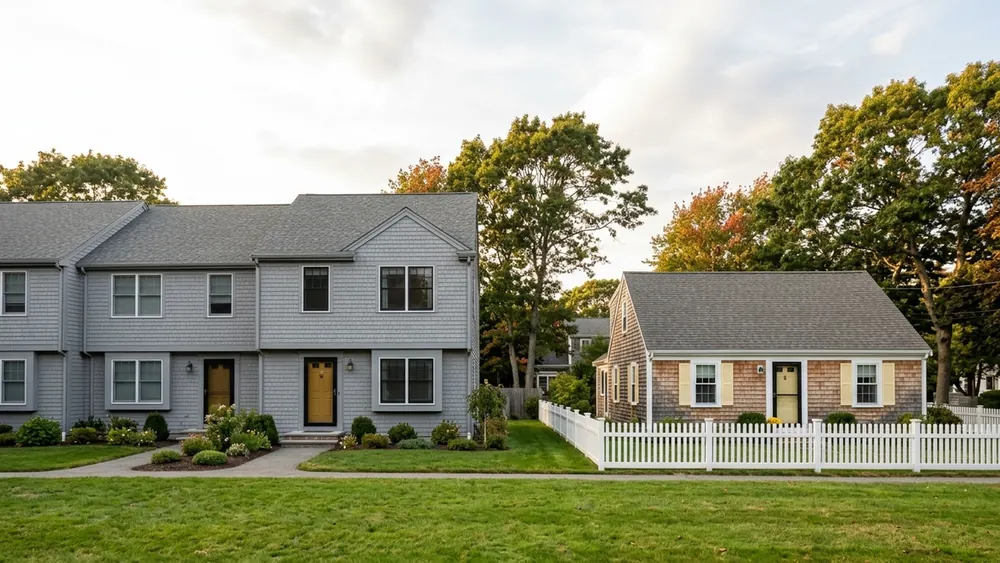
Neither is better in general. A condo trades some control for shared upkeep and association rules, while a single family home gives you more say and more responsibility. Your budget, schedule and the documents you review decide which fits you.
On this page
There is no single right answer here
Your first Rhode Island home can be a condo or a single family home, and neither one is the better choice in general. The right fit depends on your budget, how much upkeep you want to take on, how much say you want over changes, and what the documents for a specific property tell you. The goal is to choose the trade-offs you are comfortable living with.
A lot of first-time buyers start with a strong opinion borrowed from someone else. A friend loved condo life, or a parent insists a yard is the only way to go. Those views come from real experience, but they were someone else’s experience. Your income, your schedule and your plans are your own, so the comparison should be built on them, not on a general rule.
This matters because the choice shapes more than the purchase price. It affects your monthly costs, how you spend your weekends, who you call when something breaks, and what you are allowed to change. Thinking it through before you start touring keeps you from falling for a place that does not fit the way you actually want to live.
How owning a condo usually works
With a condo, you own your unit and share ownership or use of common areas with other owners. An association, usually run by a board and sometimes a manager, handles shared parts of the property and sets rules for the community. Owners typically pay a regular fee toward that upkeep and toward savings for future repairs. A townhouse-style condo works the same way, even though it can look like a house from the street.
For many buyers, the appeal is shared responsibility. Exterior work, landscaping or snow removal may be handled for you, depending on the association. The trade-off is that you follow the association’s rules, the fees can change, and big decisions about the property are made together. Which exact items the association covers varies from one property to the next, so it always comes down to the documents.
That is why reading the association’s documents is part of buying a condo, not an extra. The budget, the rules, recent meeting minutes and the reserve fund information show how the property is run and what may be coming. If something in them is unclear, the association’s board or manager is the place to ask, and a real estate attorney can help you understand what you are agreeing to.
How owning a single family home usually works
With a single family home, you generally own the house and the land it sits on, and the care of both is yours. The roof, the yard, the driveway, the heating system and the exterior are your decisions and your responsibility. Some neighborhoods also have an association, so it is worth asking about that for any address you are considering, rather than assuming either way.
For many buyers, the appeal is control. You can plan a garden, repaint the outside or take on a project without asking an association first, though permits and zoning still go through the city or town. The trade-off is that repairs and maintenance come straight to you, on your timeline and your budget, which takes planning and a bit of savings set aside for the things that wear out over time.
Before buying a single family home, plan for a licensed home inspector to look closely at the structure, roof and major systems. The report helps you understand what may need attention soon and what can wait. An insurance agent can tell you what coverage would look like for that specific property, which is part of the true monthly cost you are comparing.
Questions to answer for yourself first
Before you compare listings, it helps to answer a few questions about yourself. They have nothing to do with any particular property and everything to do with what will feel right after you move in. Your honest answers point you toward one type, the other, or a search that includes both. Take a few minutes with them before your first showing. Start with these.
- How much time you want to spend on upkeep on a typical weekend
- Whether you are comfortable following shared rules set by an association
- How you would handle a large repair bill that arrives without warning
- How much say you want over changes to the outside and the grounds
There are no wrong answers. Someone who travels for work may value shared upkeep. Someone who loves weekend projects may want a yard and full control. Plenty of people land in between and stay open to both. Writing your answers down gives you a clear way to judge every listing, and it makes your first conversation with a lender and your agent far more useful.
Comparing the two side by side
When a condo and a single family home both make your list, compare them on the same points. The table below lays out the questions worth asking for each, why they matter, and who can actually answer them. It keeps the comparison fair, because neither type gets judged on a general reputation instead of the facts for that specific property.
| Question | Why it matters | Who to ask |
|---|---|---|
| What does my monthly cost really include | Fees, taxes and insurance change the true payment | A lender, an insurance agent and the association |
| Who handles repairs to the roof and exterior | Decides what you budget for and when | The association documents or a licensed home inspector |
| What rules apply to changes and use | Limits on pets, renovations or renting later | The association and the city or town |
| What condition is the property in | Avoids surprises in the first years of ownership | A licensed home inspector |
| Is the address in a mapped flood zone | Can affect insurance needs and monthly cost | FEMA flood maps and an insurance agent |
Use the same table for every property you seriously consider. Over a few showings, you will notice which answers matter most to you. That pattern often settles the condo versus single family home question better than any general advice could, because it is built from your own reactions to real places and real documents rather than from guesses. It also gives you clear notes to bring back to your lender.
Looking at both types across Rhode Island
Rhode Island is small enough to compare widely. It takes about an hour to drive from one end of the state to the other, and Lisa D. Helfrich frequently works in about 15 different cities and towns. You might look at a condo in Providence and a single family home in Lincoln, then tour similar options in Cranston or Narragansett, all within one search.
Compare actual properties rather than general ideas about any town. Each listing has its own fees, condition and rules, and those details matter more than an impression. If a property you like is in a coastal town such as Narragansett or Newport, check official FEMA flood maps for that exact address and ask an insurance agent about coverage before you get attached.
Your next step toward a decision
You do not need to settle the question before you start. A good first step is to gather a little information and see both types in person. Before your first conversation, write down your answers to the questions above, and pull together the basics a lender and your agent will want. These are the items worth having ready.
- Your answers about upkeep, rules, repairs and control written down
- A comfortable monthly budget, including fees, taxes and insurance
- Recent pay stubs and bank statements for your lender conversation
- A short list of towns that fit your commute and routine
When you are ready, Lisa D. Helfrich can help you line up condos and single family homes side by side, walk through what each set of documents says, and plan showings anywhere in Rhode Island. There is no pressure and no right answer to arrive with. Bring your questions, and we can make a plan and take the next step together.
This article is general information about buying and selling condos and single family homes in Rhode Island. It is not legal, tax, lending, insurance, rental or inspection advice and does not predict prices, rents or returns or promise results. Confirm association fees and rules in the association’s documents, rental rules with the city or town, contracts, title and probate with an attorney, taxes with the town or a tax professional, financing with a lender, and flood and coverage questions with official flood maps and an insurer. Lisa D. Helfrich, RI Real Estate Services. Equal Housing Opportunity.

Written by